
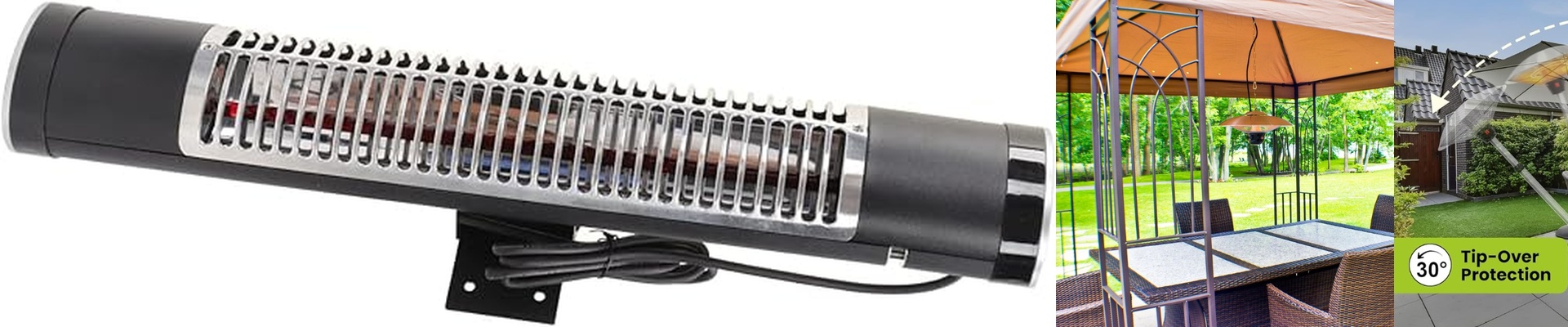
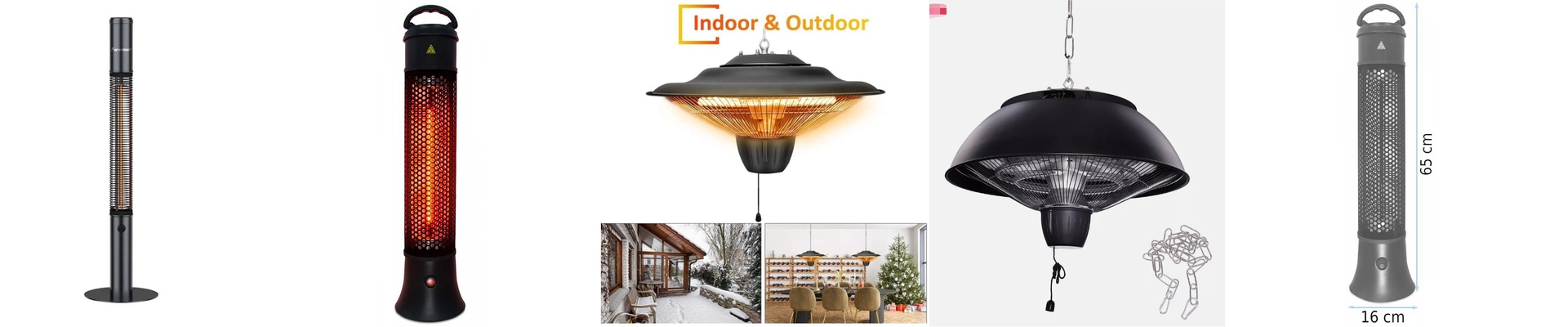



Keeping Your Garden Heaters Alive in the Rain (And Why IP65 Actually Matters)
If you’ve ever put a heater outside, you know the deal. Humidity and dust are basically trying to kill your electronics from the second you plug them in. That’s why we obsess over the IP65 rating. It sounds like technical jargon, but in plain English? It just means we’ve built a fortress around the heating element and the wiring so moisture can’t get in.
How we actually keep the water out
Here is the thing about IP65: it means the unit is tight enough to keep dust out and can handle water jets hitting it from any angle. We don’t just hope for the best—we use heavy-duty gaskets to seal the chassis and a special hydrophobic coating on the lens. Why the coating? Because fog is a pain. When warm air hits a cold lens, you get that cloudy condensation that blocks the heat. Our design manages that temperature shift so the infrared rays actually reach you, instead of getting trapped behind a wall of mist. And then there’s the “pop” factor. If a splash of cold water hits a red-hot quartz tube, the glass can crack instantly. It’s a thermal shock. To stop that, we built a housing that physically deflects spray away from the tube. It’s the difference between a heater that lasts years and those cheap ones that burn out after one rainy season.
The trade-offs
We went with shortwave infrared emitters. These are great because the heat moves fast—it doesn’t just drift away the moment a breeze kicks up. To keep the whole thing from rusting into a wasteland, we wrap it all in powder-coated aluminum. But a quick heads-up: these things put out a lot of heat. If you cram one into a tiny, tight corner with no airflow, the housing is going to get way too hot. Just make sure your mounting bracket gives the unit some room to breathe. Trust me on this one.
Making it last
At the end of the day, a good seal is what saves your wallet. When moisture sneaks into a heater, it rusts the terminals. That creates resistance, which leads to the terminals literally melting. Not a great look. By locking the moisture out, the electrical connection stays rock solid. You just wire it up to a GFCI circuit, flip the switch, and you’re warm. No more swapping out expensive tubes every spring because of a little corrosion.